
Knowing how to
make an ad work
is half the battle.
Every dollar you spend on a bad ad is a dollar you didn't spend on a good one. Knowing tells you which is which, before you spend or after you've run it.
A generic AI gives generic feedback on your ad. Knowing gives you an evaluation grounded in your brand, your goals, and your platform.

Know that your ad stops the scroll, holds attention, and earns the click.
When your ad isn't getting clicks, the problem rarely lives in the whole ad. Knowing isolates the failure to the hook, the hold, or the click, calibrated to your brand, your goal, and the platform. You'll know whether the fix is a small tweak or a bigger rethink.
 Just Listed · $849,000
feed crops to 4:5
Just Listed · $849,000
feed crops to 4:5
The Hold
Your creative is wearing a flyer: a "Just Listed" banner, your headshot, your name and number. The eye snags on it all, your face most of all, and the hold breaks before the buyer feels the home. Move it into the ad's text and give the home the frame.
The Ratio
This is a Story graphic, 9:16, dropped into the feed. Too tall: the feed crops it to 4:5 and cuts the roofline and the walkway. Build it at 4:5 so nothing's lost.

Know that your landing page finishes what the ad started.
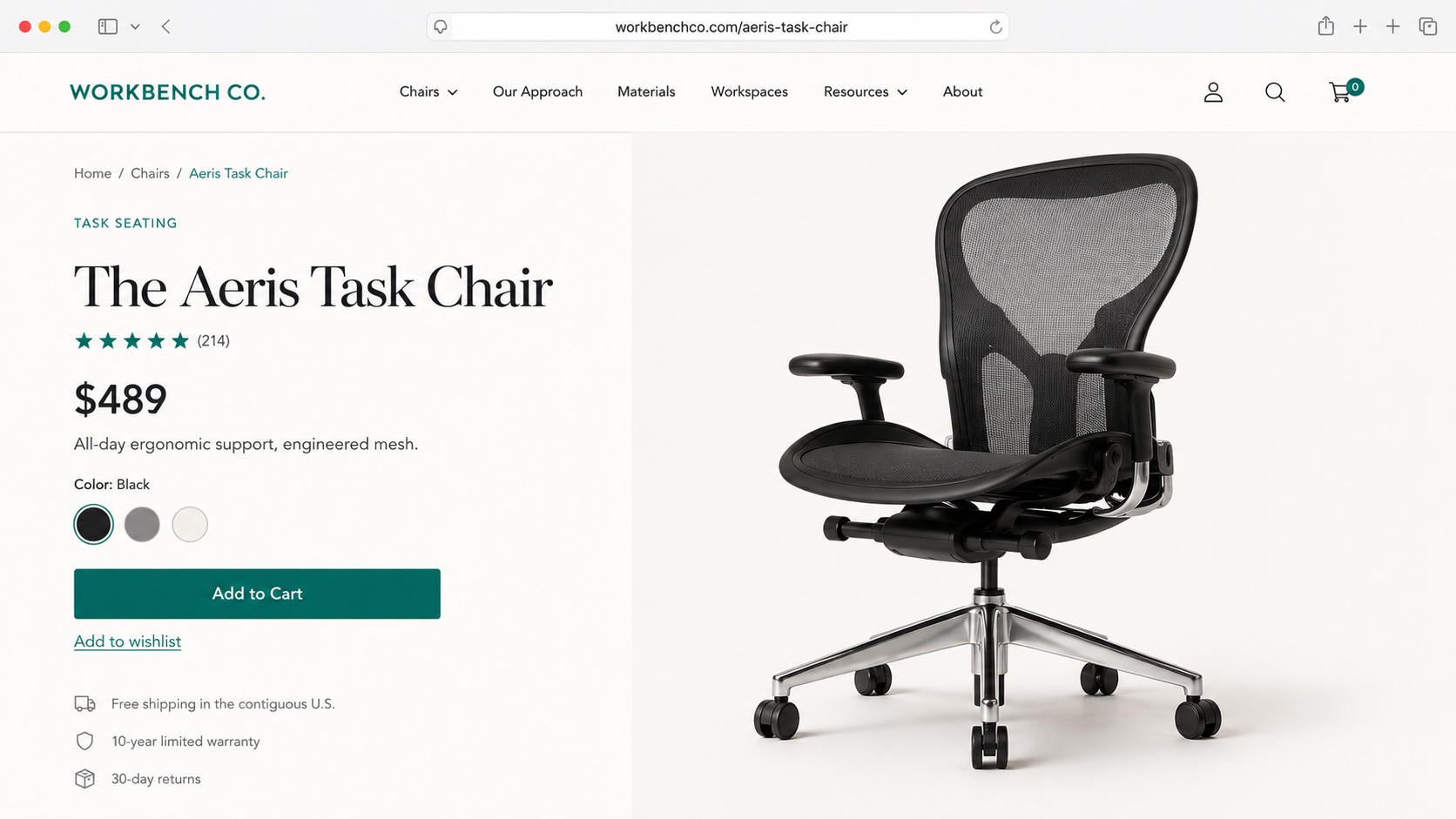
Most of the time you need the landing page to do something: get the sale, the booking, the signup. When it isn't delivering that, the problem usually traces back to the handoff from the ad. Knowing reads the ad and the page side by side and finds where the promise breaks between them. You catch the disconnect before it costs you.

The Ad
On LinkedIn, that "Claim 20% Off" button is just part of the image, not a tappable link. The real CTA is a fixed preset you pick at upload, like "Learn More," so it can't carry your offer. Put the 20% in the intro text and headline instead. The button sells it; LinkedIn's copy delivers it.
The Landing Page
The page is polished, it's the right chair, and checkout is one click away. The catch is the price: it's shown at full, and the discount that earned the click is nowhere on the page. Someone came for a deal and landed on full price, so the first thing they feel is doubt. Carry the offer through the click: show the discounted price, or apply the code before they can second-guess it.

Know that your ad delivers on your objective.
Knowing analyzes your ad and works out what it's trying to achieve. You confirm or correct that read, then Knowing checks whether the creative actually delivers on it. Your ad gets judged against your goal, not a generic idea of what a good ad looks like.

The Goal
You set sign-ups as the goal, but this ad never asks for one. It's all vibe and a soft "Learn More." Swapping that to "Book Now" (Instagram offers it for booking goals) is half the fix. The other half: open the copy with a real offer, like "First class free," so there's a reason to tap.
The Audience
You confirmed beginners and first-timers as the audience. But everyone here is already lean and mid-flow, like they've practiced for years. It signals "for the already-fit," the opposite of who you want. Put a real first-timer in the frame.

Know that your ad feels like an extension of your business.
Knowing researches your brand profile: voice, colors, typography, the way you actually show up. You confirm or refine it, and it stays yours to update as your business grows. Set it up once and every ad gets checked against it. A general AI doesn't know your brand. Knowing does.
 bare
bare
clinically perfected.
The Voice
You set your voice as plain and ingredient-first. This creative leads with "unparalleled radiance, clinically perfected," the kind of line any beauty brand could run. It reads like a competitor's ad, not yours. Name the ingredient and what it does instead.
The Look
You set your look as muted and editorial. This creative is a glossy pink gradient on a stock model, the house style of mass beauty. On Pinterest people save by aesthetic, so an off-brand frame won't read as yours. Bring it back to your palette and type.
The Frame
You baked the headline into the creative. But Pinterest prints the title itself, right under the Pin, and the bottom strip is where its own description sits. Your words end up doubled, or covered. Keep the bottom clear and let the Pin's title carry them.
An ad intelligence harness
that brings a trained eye to your ads.
Your ad
Drop
The harness
Analyze
Your strategy
Confirm
The evaluation
Recommend
Knowing's evaluations are grounded in the work of Binet & Field, the Kellogg School, Ogilvy, and fifty years of advertising-effectiveness research. We also calibrate to the current technical requirements of every platform you run on and the compliance rules of regulated industries—not the model's general intelligence.
Platforms we support today

Static social and display, for now.